


Lingerie Market Size to Reach USD 145.5 Billion by 2032
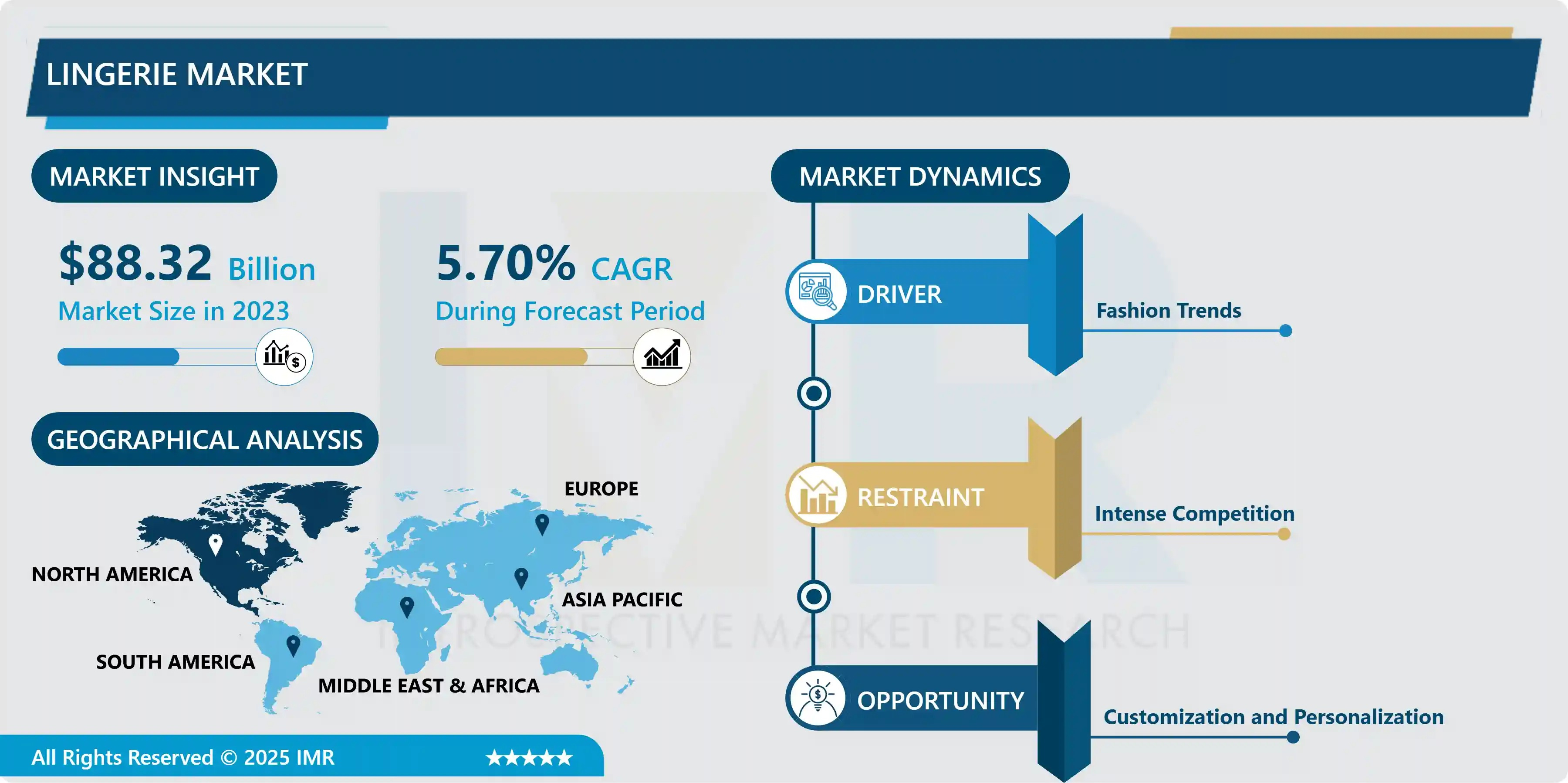
According to a new report published by Introspective Market Research, Lingerie Market by Product Type, Distribution Channel, and Price Point, The Global Lingerie Market Size Was Valued at USD 88.32 Billion in 2023 and is Projected to Reach USD 145.5 Billion by 2032, Growing at a CAGR of 5.7%.
Market Overview:
The global Lingerie Market represents a significant and evolving segment of the apparel industry, encompassing a wide range of intimate apparel for women, including bras, panties, shapewear, sleepwear, and loungewear. Modern lingerie offers substantial advantages over traditional undergarments, focusing on comfort, fit, support, and aesthetic appeal through the use of advanced fabrics, innovative designs, and inclusive sizing. It has transitioned from being a basic necessity to a key component of personal style, self-expression, and body confidence, catering to diverse consumer needs from everyday functionality to luxury and sensuality.
Growth Driver:
The primary growth driver for the lingerie market is the powerful convergence of the body positivity movement and the industry's shift toward inclusivity and diversity. Consumers are increasingly demanding lingerie that celebrates all body types, which has compelled brands to dramatically expand their size ranges, offer more diverse skin-tone shades, and feature realistic marketing campaigns. This cultural shift is dismantling traditional beauty standards and creating a more welcoming market for a broader customer base. Furthermore, the rising focus on self-care and personal wellbeing, especially post-pandemic, has repositioned lingerie as an essential component of comfort and confidence, driving purchases not just for special occasions but for everyday empowerment and satisfaction.
Market Opportunity:
A significant market opportunity lies in the rapid expansion of the online direct-to-consumer (DTC) channel and the development of smart, tech-enabled lingerie. The DTC model allows niche and innovative brands to bypass traditional retail markups, gather valuable customer data, and build loyal communities through personalized marketing and subscription services. Simultaneously, the integration of technology presents a frontier for growth, with opportunities in smart fabrics that offer health monitoring (like temperature regulation or breast health sensors), adaptive fit through responsive materials, and augmented reality (AR) for virtual try-ons. Brands that successfully leverage e-commerce agility with cutting-edge, functional technology can capture a highly engaged and modern consumer segment.
The Lingerie Market is segmented on the basis of Product Type, Distribution Channel, and Price Point.
Product Type
The Product Type segment is further classified into Brassieres, Knickers & Panties, Shapewear, Lounge Wear & Sleepwear, and Others. Among these, the Brassieres sub-segment accounted for the highest market share in 2023. Bras dominate the market due to being a fundamental, daily-wear item with high replacement frequency. Their demand is driven by both essential needs (support, comfort) and fashion trends (styles, colors, designs). Continuous innovation in features like wireless support, seamless construction, and specialized designs (sports, maternity, plus-size) ensures consistent consumer interest and repeat purchases, solidifying bras as the core revenue generator in the lingerie category.
Distribution Channel
The Distribution Channel segment is further classified into Online Retail and Offline Retail. Among these, the Online Retail sub-segment accounted for the highest market share and is the fastest-growing channel. The dominance of online retail is fueled by its convenience, privacy, wider selection, competitive pricing, and the rise of DTC brands. Detailed size guides, customer reviews, and hassle-free return policies have overcome traditional barriers to online lingerie shopping. The ability to discover niche brands and the integration of AI for personalized recommendations are accelerating the shift from brick-and-mortar stores to digital platforms.
Some of The Leading/Active Market Players Are-
• Victoria's Secret & Co. (USA)
• Hanesbrands Inc. (USA)
• L Brands (USA)
• PVH Corp. (Calvin Klein, Tommy Hilfiger) (USA)
• Lace Incorporated (India)
• Jockey International, Inc. (USA)
• Wacoal Holdings Corp. (Japan)
• Triumph International (Switzerland)
• Chantelle Group (France)
• Hunkemöller International B.V. (Netherlands)
• Bare Necessities (USA)
• ThirdLove (USA)
• Savage X Fenty (USA)
• Aimer Group (China)
• and other active players.
Key Industry Developments
News 1:
In February 2024, Savage X Fenty announced a major expansion into new international markets, including key European and Asian countries.
The expansion is backed by a new logistics partnership to streamline its subscription and direct-to-consumer model globally. This move aims to capture market share from traditional retailers by leveraging its inclusive branding and digitally-native approach in regions with growing demand for diverse lingerie options.
News 2:
In March 2024, Victoria's Secret launched a new high-tech "Comfort Flex" bra line featuring temperature-regulating fabric and AI-designed fit.
The collection utilizes smart materials that adapt to body temperature and was developed using 3D body scan data from thousands of women. This initiative marks a strategic pivot for the brand towards innovation-driven comfort and personalized fit, aiming to regain market leadership through technology.
Key Findings of the Study
• The Brassieres product segment holds the dominant market share due to essential demand and high replacement rates.
• The Online Retail distribution channel is the largest and fastest-growing, driven by convenience and DTC models.
• Market growth is propelled by the body positivity movement, inclusivity in sizing, and the rise of self-care trends.
• Key trends include the premiumization of everyday wear, adoption of sustainable materials, and the emergence of smart lingerie.
• The Asia-Pacific region is experiencing the fastest growth, fueled by rising disposable incomes and fashion awareness.

 English
 Arabic
 French
 Spanish
 Portuguese
 Turkish
 Dutch
Dutch
 Italiano
 Russian
 Romaian
 Portuguese (Brazil)
 Greek
Greek