


Global Automotive Lithium-Ion Battery Recycling Market Analysis: Size, Trends, and Forecast
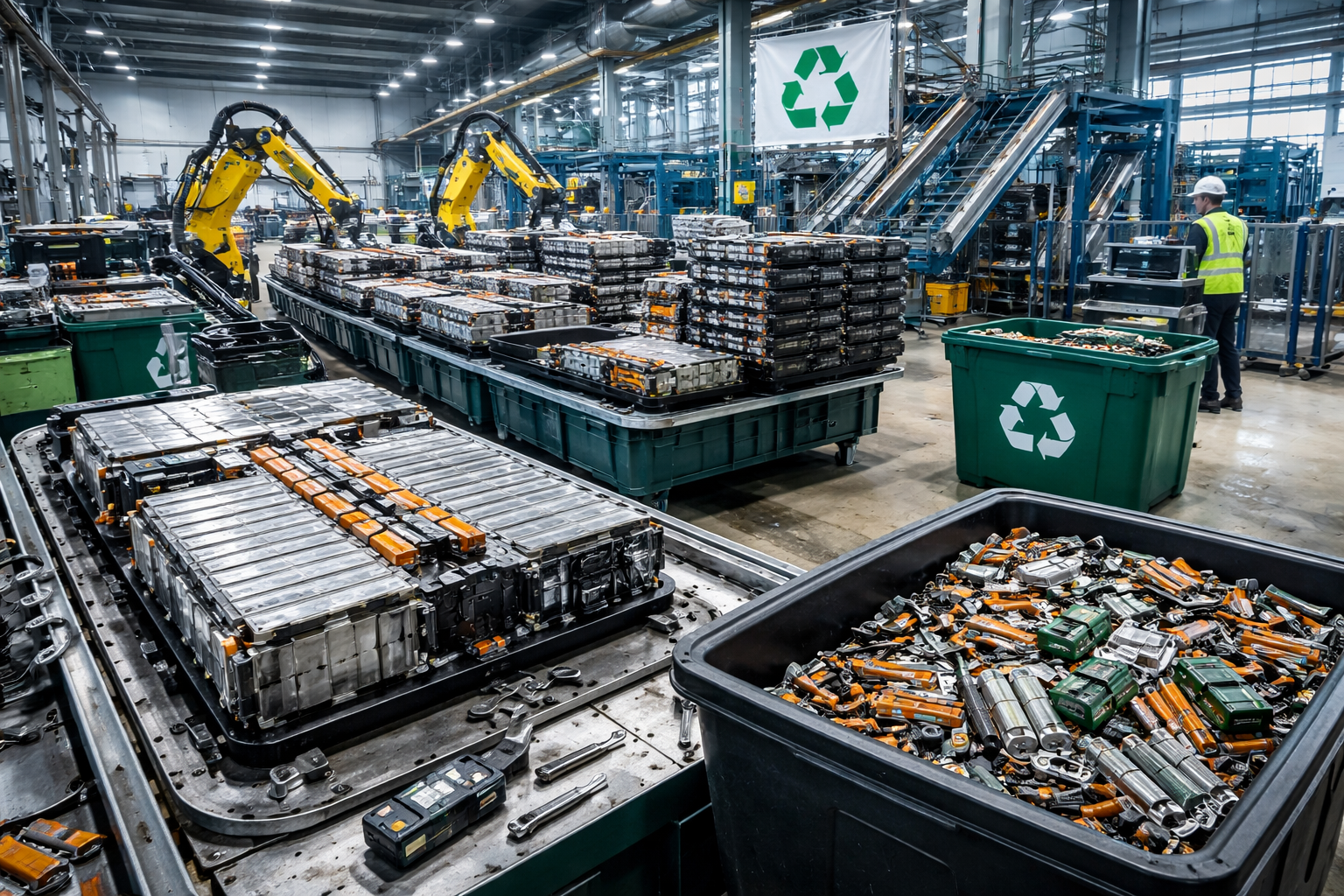
The automotive lithium-ion battery recycling market is projected to grow from USD 12.87 billion in 2025 to USD 36.33 billion by 2032, at a CAGR of 16.0% during the forecast period. The recycling market for lithium-ion batteries used in the automotive sector is driven by the rapid adoption of electric vehicles (EVs) and the resultant increase in battery waste. The sector's expansion is fueled by the growing demand for lithium, nickel, cobalt, and manganese, as well as concerns over the primary mining risk to the supply chains. Governments are now offering incentives and adopting EPR policies. Moreover, sustainability goals set by original equipment manufacturers (OEMs) are leading to the increased use of recycled materials that have a smaller carbon footprint. The development of recycling technologies, alongside the rise of investments and partnerships throughout the automotive industry, is another factor that is promoting the market growth.
Download PDF Brochure: https://www.marketsandmarkets.com/pdfdownloadNew.asp?id=51584986
Based on battery chemistry, the lithium-nickel-manganese-cobalt (NMC) segment accounted for the largest share of the automotive lithium-ion battery recycling market. Nickel, manganese, and cobalt are combined in the cathode of NMC batteries. It has some of the highest energy density among all lithium-ion chemistries commercially available. For example, the model NMC811, which is rich in nickel content, can reach energy densities of around 250 Wh/kg, which is already considerably higher than that of many lower-nickel or iron-based alternatives. This has lured major car makers into adopting the NMC technology for their long-range EV platforms. Data on production reveal that global output of NMC batteries is increasing by more than 20% every year as companies like Tesla and Hyundai are converting their models to higher-nickel types, and the recycling capacity of NMC batteries has already crossed 75,000 metric tons in 2023 as old cars get into recycling systems, providing new materials for making new batteries. This increase in recycled materials is supported by the North American, European, and Chinese governments' regulatory incentives.
Based on battery component, the cathode active materials segment is projected to witness significant growth in the automotive lithium-ion battery recycling market. These materials have high economic value and play a major part in EV battery performance. Cathodes are composed of lithium, nickel, cobalt, and manganese, which are the most important metals that can be recovered. These metals alone constitute a considerable proportion of total battery material costs. Thus, they are the leading target for recycling investments. The adoption of EVs is accelerating, and together with it, the demand for these minerals is outpacing the primary mining capacity, while price volatility and supply-chain risks are adding to the appeal of cathode materials recovery from end-of-life batteries. The development of the hydrometallurgical and direct recycling technologies has now made it possible to have higher cathode material recovery rates and purity, allowing the recycled metals to be reintroduced into the new automotive batteries with almost zero performance loss. The strong regulatory support for closed-loop recycling and OEMs' commitment to reduce battery lifecycle emissions are driving rapid growth in cathode active material recycling compared to other battery components, such as anodes, electrolytes, or casings.
Leading players operating in the automotive lithium battery recycling market include Contemporary Amperex Technology Co., Ltd. (China), Umicore (Belgium), Glencore (Switzerland), Cirba Solutions (US), and RecycLiCo Battery Materials Inc. (Canada). These companies have widespread facilities, an established portfolio of lithium-ion battery recycling, a robust market presence, and strong business strategies.
Contemporary Amperex Technology Co., Ltd. (China)
Contemporary Amperex Technology Co., Ltd. (CATL) focuses on new innovative technologies. It is listed on the Shenzhen Stock Exchange (China). CATL offers its services through a solution-based portfolio that includes passenger vehicles, commercial applications, energy storage systems, and battery recycling. The company recycles lithium-ion batteries through its subsidiary, Guangdong Brunp Recycling Technology (China).
Umicore (Belgium)
Umicore is a materials technology company and recycling group in chemistry, material science, and metallurgy, with operations across Europe, North America, South America, Asia Pacific, and Africa. It operates through three business segments, namely recycling, catalysis, and energy & surface technologies. The recycling segment comprises battery recycling solutions, jewelry & industrial metals, precious metals management, and precious metals refining.
Umicore serves various industries, including energy, automotive, recycling, chemicals, manufacturing, optics & displays, precious metals, and electronics. It operates a recycling facility in Hoboken (Belgium). Also, the company recycles batteries through its recycling plant in Hanau (Germany). Both facilities employ hydrometallurgy and pyrometallurgy recycling processes while recycling batteries. The feedstock for recycling includes industrial residues, electronic scrap, batteries, automotive & industrial catalysts, and fuel cells. The company comprises 15 R&D facilities focusing on various developments, including battery recycling and advanced technology development related to decarbonization and emission reduction programs.
Get a Sample Copy of This Report: https://www.marketsandmarkets.com/requestsampleNew.asp?id=51584986
Glencore (Switzerland)
Glencore is a diversified natural resource company and one of the major recyclers and processors of lithium-ion batteries, end-of-life electronics, and other metal-bearing products. The company recovers products, including copper, nickel, cobalt, zinc, ferroalloys, and precious metals. It operates its business through two reportable segments: metals & minerals and energy products. Lithium-ion battery recycling services are offered in the metals and minerals segment.
Glencore's facilities safely treat complex feeds such as lithium-ion or NiMH batteries, catalysts, and plating sludge. With operations in the Americas, Asia Pacific, Africa, and Europe, Glencore processes small, portable batteries, as EDV batteries present a higher risk due to the various chemistries involved. It has a global marketing network, with offices in over 35 countries. The company imposes a treatment charge for processing batteries and offers a significant cobalt credit back to customers sending batteries.
Cirba Solutions (US)
Cirba Solutions is a leading company in the waste management industry that recycles batteries and processes materials. It recycles every possible material from batteries, including the steel casing, base materials, plastics, and packaging. It is a comprehensive recycler of alkaline, lithium-ion, NiCad, NiMH, and lead-acid batteries. The company can recycle lithium-ion batteries of all battery chemistries. Using pyrometallurgical and hydrometallurgical treatments, it recovers metals such as lithium, iron, cobalt, and nickel, and plastics from spent lithium-ion batteries.

 English
 Arabic
 French
 Portuguese
 Deutsch
 Turkish
 Dutch
Dutch
 Italiano
 Russian
 Romaian
 Portuguese (Brazil)
 Greek
Greek