


Management Decision Market Trends Driving Data-Driven Strategy and Analytics
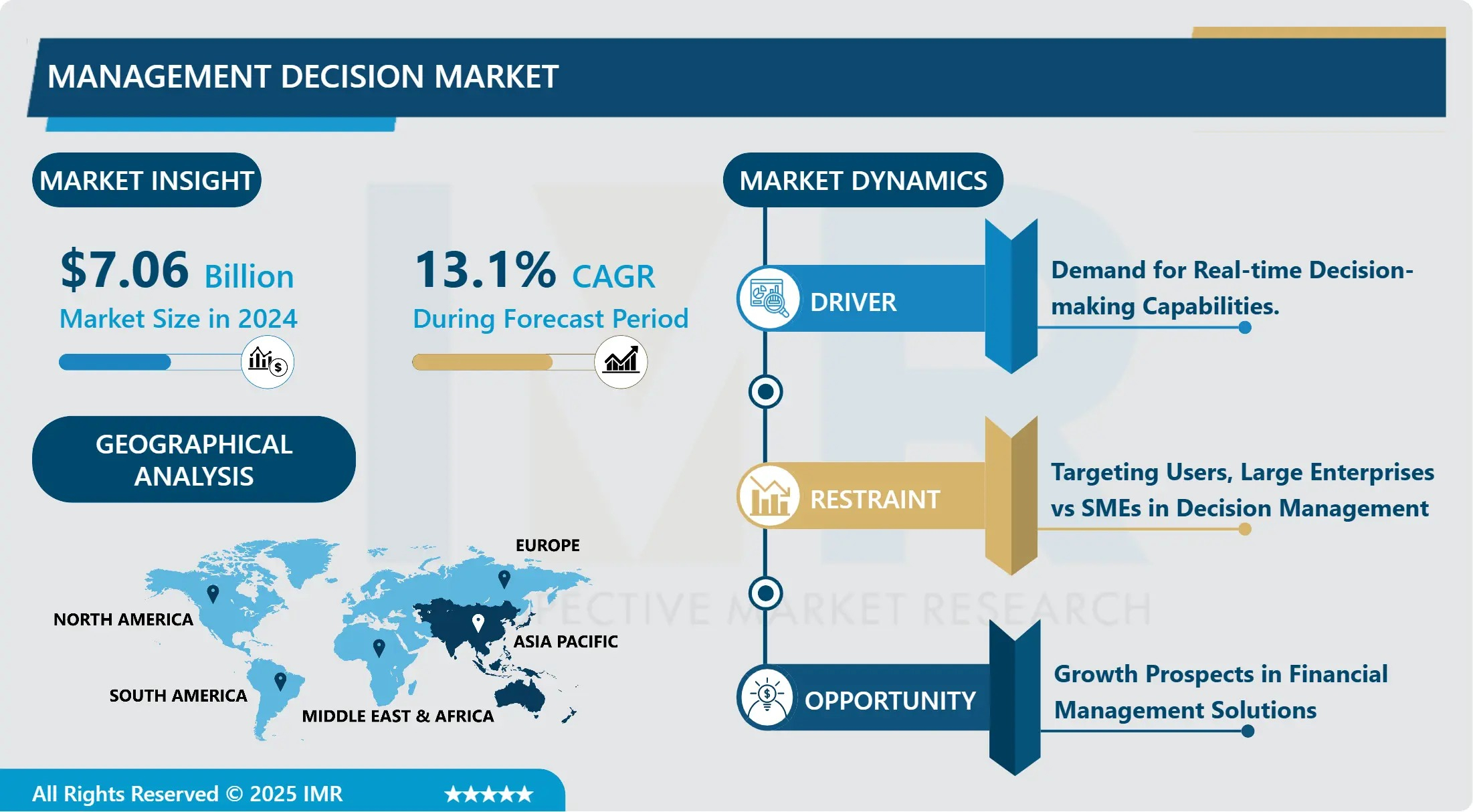
According to a new report published by Introspective Market Research, Barcode Printer Market by Printer Type, Technology, Application, and End-User, The Global Barcode Printer Market Size Was Valued at USD 7.06 Billion in 2024 and is Projected to Reach USD 18.90 Billion by 2032, Growing at a CAGR of 13.1%.
Market Overview
The global barcode printer market is accelerating at a remarkable pace, driven by the relentless demand for supply chain automation, asset tracking, and inventory accuracy across industries. Barcode printers are specialized devices that produce scannable barcode labels and tags on various media like paper, polyester, or vinyl. Their key advantage over traditional document printers lies in their durability, precision in printing high-resolution machine-readable codes, and ability to withstand industrial environments. They are essential for creating the physical link in a data capture ecosystem, enabling real-time visibility and traceability from manufacturing to point-of-sale.
Growth Driver
The primary growth driver for the barcode printer market is the explosive expansion of the e-commerce and omni-channel retail sector, which demands unprecedented levels of supply chain speed and accuracy. The need to process millions of orders daily, manage complex inventories across multiple fulfillment centers, and ensure perfect order fulfillment has made barcode labeling non-negotiable. Each item, carton, and pallet requires a unique, scannable label for tracking throughout the journey from warehouse to customer doorstep. This drives massive demand for reliable, high-speed industrial and desktop printers. Additionally, the rise of same-day and next-day delivery expectations forces logistics providers to invest heavily in automated sortation systems, which are entirely dependent on accurately printed and applied barcodes to function.
Market Opportunity
A significant and high-growth opportunity lies in the integration of Radio-Frequency Identification (RFID) technology into hybrid barcode printer solutions. While barcodes remain dominant, RFID offers advantages for bulk reading, non-line-of-sight scanning, and storing more data on a tag. The market opportunity exists in manufacturing and selling dual-technology printers that can encode and print both barcode labels and RFID inlays in a single pass. This is particularly valuable for retailers implementing item-level inventory tracking, libraries managing assets, and manufacturers requiring sophisticated work-in-process tracking. Companies that can provide these integrated, future-proof solutions will capture a premium segment of the market and build long-term partnerships with clients modernizing their automatic identification and data capture (AIDC) infrastructure.
The Barcode Printer Market is segmented on the basis of Printer Type, Technology, and End-User.
Printer Type
The Printer Type segment is further classified into Industrial, Desktop, and Mobile. Among these, the Industrial Printer sub-segment accounted for the highest market share. Industrial printers are designed for high-volume, continuous operation in demanding environments like manufacturing floors and distribution centers. They offer superior print speed, durability, large media capacity, and the ability to handle a wide range of label materials. Their robustness and reliability for mission-critical labeling applications, such as shipping compliance and pallet labeling, justify their higher price point and make them the revenue leader in the market.
Technology
The Technology segment is further classified into Thermal Transfer, Direct Thermal, Inkjet, and Laser. Among these, the Thermal Transfer printing technology sub-segment accounted for the highest market share. Thermal transfer printers use a heated ribbon to produce durable, long-lasting images on synthetic labels that resist heat, moisture, and abrasion. This makes them ideal for applications where labels must withstand harsh environmental conditions or remain legible throughout a product's lifecycle, such as in electronics manufacturing, automotive parts, and outdoor asset tracking. The superior durability of thermal transfer output is a key factor in its dominant market position.
Some of The Leading/Active Market Players Are-
- Zebra Technologies Corporation (USA)
- Honeywell International Inc. (USA)
- SATO Holdings Corporation (Japan)
- TSC Auto ID Technology Co., Ltd. (Taiwan)
- Avery Dennison Corporation (USA)
- Brother Industries, Ltd. (Japan)
- Seiko Epson Corporation (Japan)
- Toshiba Tec Corporation (Japan)
- Citizen Systems Japan Co., Ltd. (Japan)
- Godex International Co., Ltd. (Taiwan)
- Postek Electronics Co., Ltd. (China)
- Primera Technology, Inc. (USA)
- Wasp Barcode Technologies (USA)
- “and other active players.”
Key Industry Developments
News 1:
In March 2024, Zebra Technologies unveiled its new ZD500 series of high-duty cycle RFID printers, designed to simplify UHF RFID label encoding and printing for supply chain and retail applications.
This launch targets the growing demand for item-level RFID tracking, providing a robust solution to help businesses improve inventory accuracy from the backroom to the sales floor.
News 2:
In January 2024, Honeywell launched its new PM45 industrial printer, emphasizing enhanced connectivity options (including IoT-ready features) and a user-replaceable printhead to reduce maintenance downtime.
This product introduction focuses on the needs of smart factories and warehouses, where printer uptime and integration into broader data ecosystems are critical for operational efficiency.
Key Findings of the Study
- Industrial Printers and Thermal Transfer technology are the dominant segments by revenue.
- North America is the largest market, while the Asia-Pacific region is growing the fastest due to manufacturing and e-commerce expansion.
- Growth is overwhelmingly driven by e-commerce logistics demands and supply chain automation initiatives.
- Key trends include the growing adoption of RFID-enabled printing solutions and increased demand for mobile printers for field service and in-store applications.

 English
 Arabic
 French
 Spanish
 Portuguese
 Deutsch
 Turkish
 Dutch
Dutch
 Italiano
 Russian
 Portuguese (Brazil)
 Greek
Greek