


Activewear Market Trends Driving Athleisure and Performance Apparel Demand
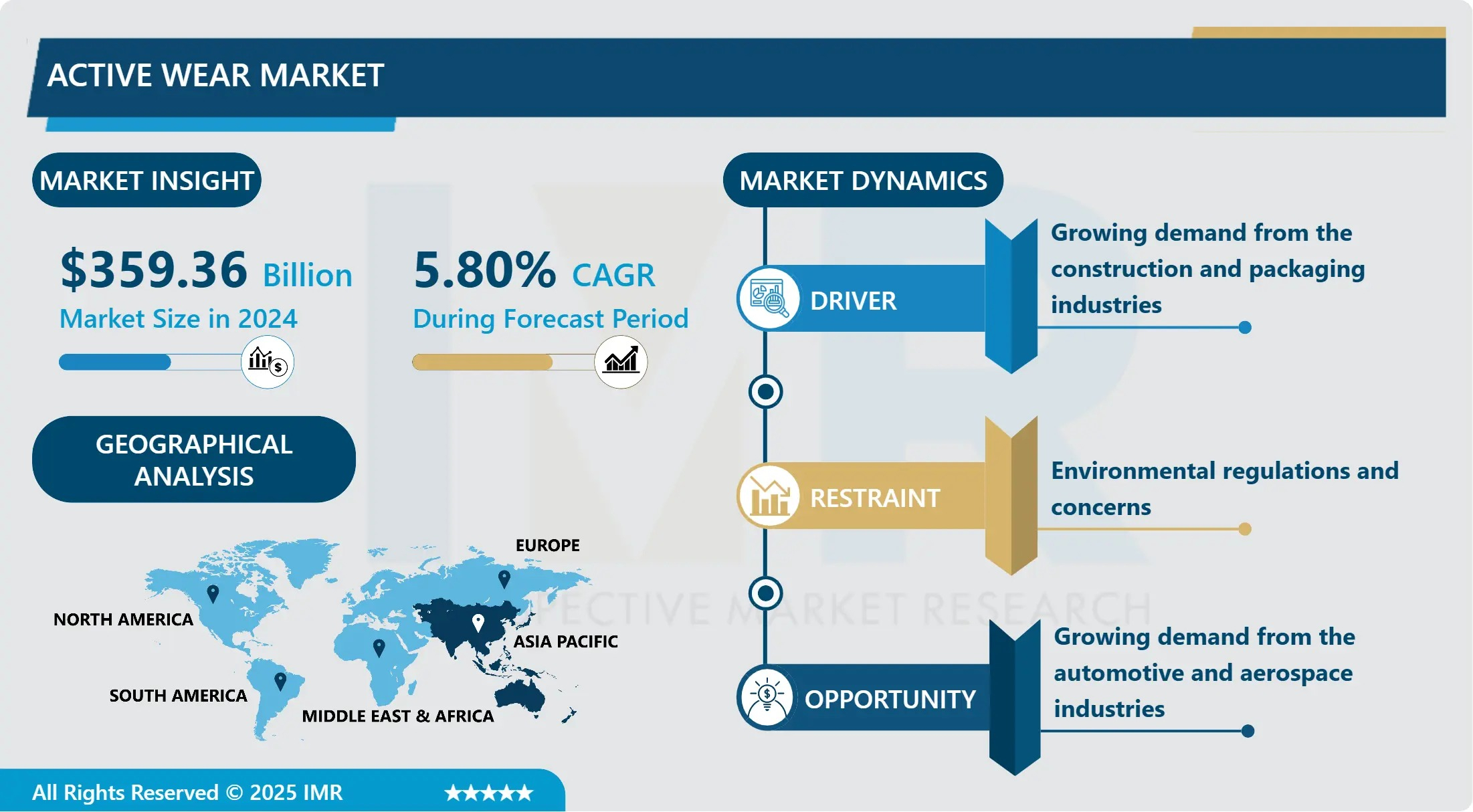
According to a new report published by Introspective Market Research, Active Wear Market by Product Type, Usage, Consumer Group, and Distribution Channel, The Global Active Wear Market Size Was Valued at USD 359.36 Billion in 2024 and is Projected to Reach USD 564.18 Billion by 2032, Growing at a CAGR of 5.80%.
Market Overview
The global active wear market is experiencing a transformative surge, driven by a fundamental shift in consumer lifestyles. Encompassing performance-oriented apparel, footwear, and accessories designed for physical activities, the market is defined by products made from advanced functional materials such as moisture-wicking fabrics that offer breathability, flexibility, and enhanced comfort. These advantages over traditional clothing including improved performance, injury prevention, and better temperature regulation have made activewear indispensable for serious athletes and casual fitness enthusiasts alike.
Growth Driver
The single most significant driver for the active wear market is the powerful convergence of growing health consciousness and the dominant athleisure trend. A global focus on physical well-being has led consumers to prioritize an active lifestyle, directly increasing demand for specialized apparel for activities ranging from yoga to high-intensity training. Concurrently, athleisure has redefined fashion norms, transforming performance wear into versatile, stylish staples acceptable in everyday settings from offices to social gatherings. This dual demand—for functionality during workouts and fashion-forward design for daily life—has dramatically expanded the consumer base and usage occasions, compelling brands to innovate at the intersection of technology and style. The trend is especially potent among Millennials and Gen Z, who view activewear as an expression of their values centered on health, wellness, and convenience.
Market Opportunity
A paramount opportunity lies in the accelerating consumer shift towards ethical consumption and sustainable products. An increasingly informed consumer base is demanding greater transparency and responsibility, creating a robust market for activewear made from eco-friendly materials like recycled polyester, organic cotton, and bio-based fabrics. This movement goes beyond materials to encompass ethical supply chains, circular economy initiatives, and reduced environmental footprints. Brands that genuinely commit to sustainability through initiatives like Adidas's partnership with Parley for the Oceans or ASICS's development of ultra-low CO2 emission sneakers are building powerful brand loyalty and differentiating themselves in a crowded market. This paradigm shift makes sustainability not just a niche trend but a strategic imperative for long-term growth and market leadership.
The Active Wear Market is segmented on the basis of Product Type, Consumer Group, and Distribution Channel.
Product Type
The Product Type segment is further classified into Apparel, Footwear, and Accessories. Among these, the Apparel sub-segment accounted for the highest market share. This dominance is due to the extensive and essential range of products it encompasses, including leggings, sports bras, shorts, tops, and outerwear, which form the core of any active wardrobe. Continuous innovation in fabric technology, such as the development of advanced moisture-wicking, compression, and sustainable materials, ensures these products meet the evolving demands for performance, comfort, and style. The versatility of apparel, serving both rigorous athletic needs and casual athleisure wear, solidifies its leading position.
Consumer Group
The Consumer Group segment is further classified into Men, Women, and Kids. Among these, the Women's segment is a major revenue driver, often accounting for the highest or a near-equal market share. This is propelled by a significant increase in female participation in fitness and sports, coupled with targeted product innovation. Brands are now designing women's activewear with a sharp focus on solving specific issues like fit, support, and comfort, as evidenced by Adidas creating collections based on deep consumer insights to prevent workout distractions. The rise of women-specific athletic events and a strong cultural emphasis on female wellness further accelerate growth in this segment.
Some of The Leading/Active Market Players Are-
- Nike, Inc. (USA)
- Adidas AG (Germany)
- Puma SE (Germany)
- Lululemon Athletica Inc. (Canada)
- Under Armour, Inc. (USA)
- ASICS Corporation (Japan)
- V.F. Corporation (USA)
- Columbia Sportswear Company (USA)
- Skechers U.S.A., Inc. (USA)
- New Balance Athletics, Inc. (USA)
- Fila Holdings Corp. (South Korea)
- ANTA Sports Products Ltd. (China)
- Gymshark (UK)
- The Gap, Inc. (including Athleta) (USA)
- “and other active players.”
Key Industry Developments
News 1: Strategic Acquisition to Expand Market Reach
In January 2024, Platinum Equity LLC acquired Augusta Sportswear Brands (ASB) and Founder Sport Group (FSG). This merger creates a stronger combined entity in the sports and lifestyle apparel sector. The acquisition is strategically aimed at broadening the product portfolio, enhancing customer service capabilities, and improving supply chain efficiencies to better serve a diverse customer base.
News 2: Brand Launch Focused on Performance and Sustainability
In January 2024, Athleta (a brand under Gap Inc.) launched its new high-performance training collection. This line was developed over three years with direct input from professional athletes and everyday consumers. In the same month, Adidas AG formally launched the Adidas Foundation, an initiative focused on community impact through pillars centered on people, planet, and relief, underscoring its commitment to social responsibility.
Key Findings of the Study
- The Apparel product segment and the Women's consumer segment are dominant market drivers.
- North America currently leads the market, while the Asia-Pacific region is projected to be the fastest-growing market due to urbanization and rising disposable incomes.
- Key growth is fueled by rising health consciousness, the athleisure trend, and increasing participation in recreational activities.
- Major market trends include a strong pivot toward sustainable and eco-friendly products and significant innovation in functional fabric technologies.

 English
 Arabic
 French
 Spanish
 Portuguese
 Deutsch
 Turkish
 Dutch
Dutch
 Russian
 Romaian
 Portuguese (Brazil)
 Greek
Greek